Non-Destructive Testing (NDT) Workshop at ITB: Campus and Industry Synergy to Advance Material Testing Technology
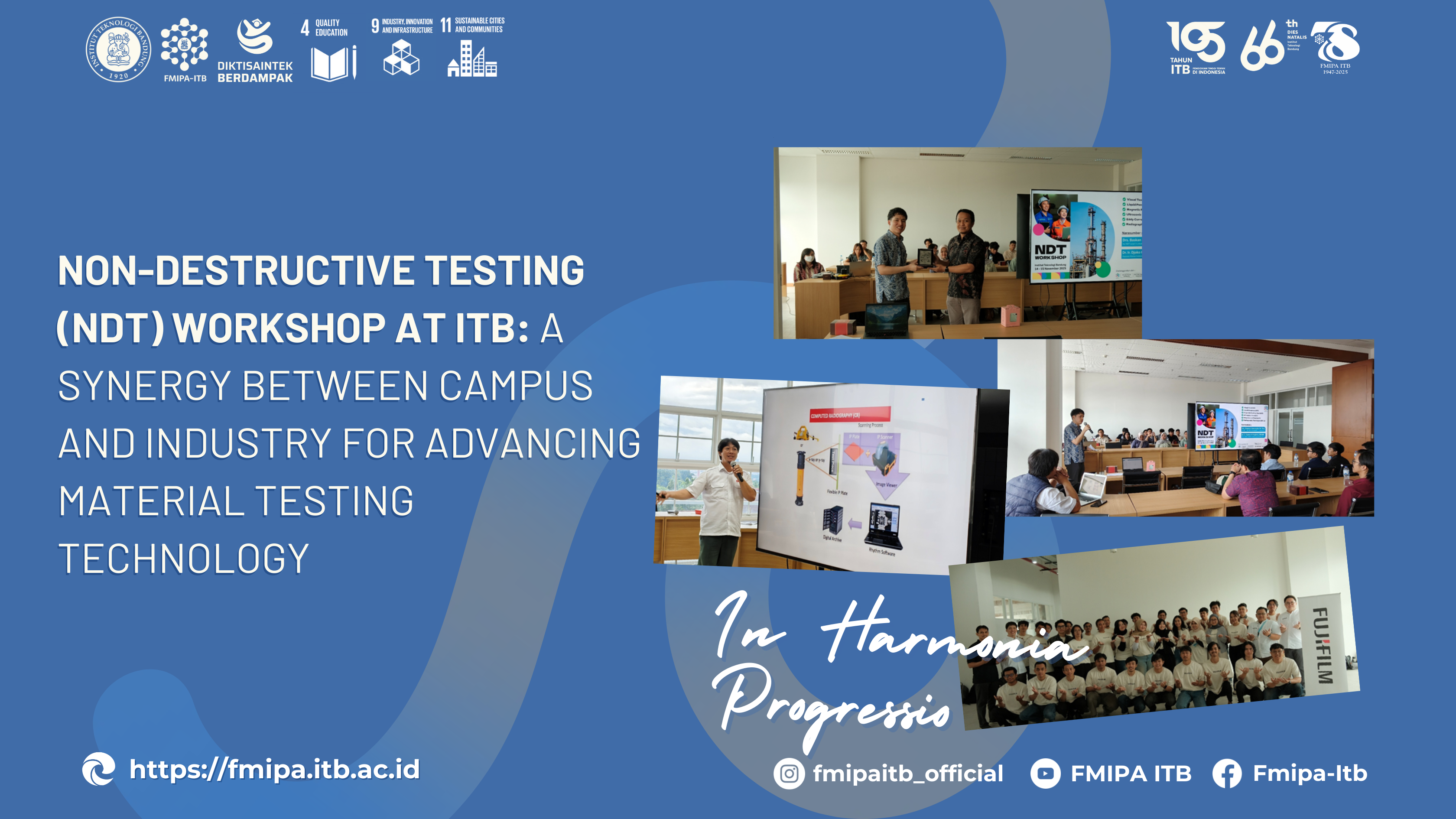
BANDUNG, fmipa.itb.ac.id — Bandung Institute of Technology (ITB) through the Nuclear Physics and Biophysics Research Group (KK FNB) of the Physics Study Program in collaboration with the Center for Nuclear Science, Innovation, and Technology (PSTIN) ITB successfully held a Non-Destructive Testing (NDT) Workshop on November 14-15, 2025. This event is a strategic initiative to improve understanding and competence in the field of science and technology. Non-Destructive Testing, a technology that is increasingly being applied in various industrial sectors.
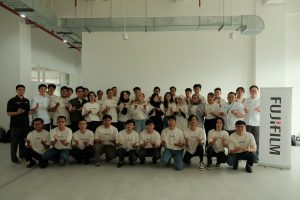
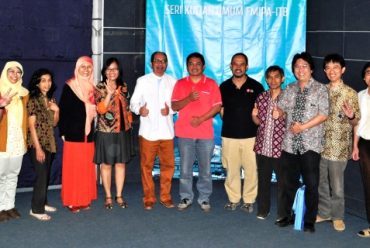
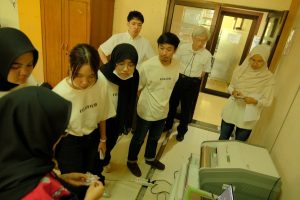
The workshop was attended by 40 participants, including students, academics, and industry practitioners. The diverse backgrounds of the participants reflect the high demand and interest in NDT technology, particularly in ensuring material quality, preventing structural failure, and improving construction safety. The event also received full support from industry partners Fujifilm Indonesia and Intergf, who provided equipment and professional instructors for the hands-on experience.
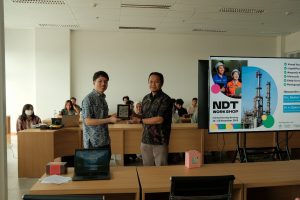
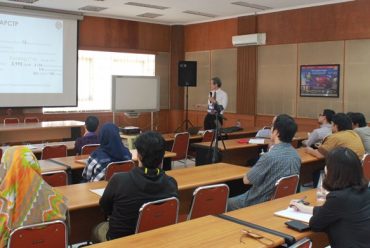
Throughout the two-day program, participants received a series of materials ranging from basic concepts to technical applications in the industrial sector. The workshop was officially opened by Dr. Eng. Dwi Irwanto, S.Si., M.Si., M.Eng., representing the Academic Council of FMIPA ITB, and Prof. Dr.Eng. Ir. Sidik Permana, S.Si., M.Eng., as Chair of KK FNB and Deputy Chair of PSTIN. On the first day, the instructor delivered an introduction to various NDT methods such as Radiographic Testing (RT), Ultrasonic Testing (UT), Magnetic Particle Testing (MT), Penetrant Testing (PT), Eddy Current Testing, and Visual Testing (VT). Participants also gained insight into safety standards, radiation regulations, and the physical principles underlying each method. The materials were delivered directly by Dr. Ir. Djoko Hadi Prajitno, UMKM., and Baskan Hanuradjie, M.Eng.
Throughout the two-day program, participants received a series of materials ranging from basic concepts to technical applications in the industrial sector. The workshop was officially opened by Dr. Eng. Dwi Irwanto, S.Si., M.Si., M.Eng., representing the Academic Council of FMIPA ITB, and Prof. Dr.Eng. Ir. Sidik Permana, S.Si., M.Eng., as Chair of KK FNB and Deputy Chair of PSTIN. On the first day, the instructor delivered an introduction to various NDT methods such as Radiographic Testing (RT), Ultrasonic Testing (UT), Magnetic Particle Testing (MT), Penetrant Testing (PT), Eddy Current Testing, and Visual Testing (VT). Participants also gained insight into safety standards, radiation regulations, and the physical principles underlying each method. The materials were delivered directly by Dr. Ir. Djoko Hadi Prajitno, UMKM., and Baskan Hanuradjie, M.Eng.
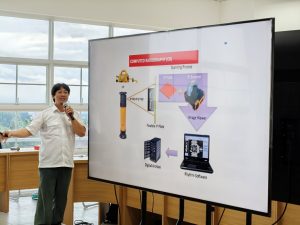
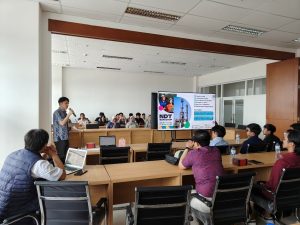
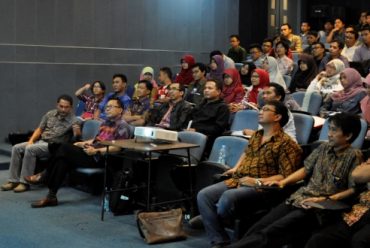
In addition to lectures and hands-on practice, the workshop included an interactive discussion forum connecting participants with experienced industry experts. Topics covered the latest developments in NDT technology, challenges in large component inspection, the need for professional certification, and career opportunities in materials testing. The enthusiasm of the participants was evident in the numerous technical questions and lively discussions throughout the event.
The successful implementation of this workshop demonstrates ITB's commitment to fostering strong collaboration between academia, industry, and professionals. This event not only enriched the participants' academic knowledge but also provided valuable exposure for students to understand real-world industry needs and promising career prospects in the NDT field. With continued support from industry partners, this workshop is expected to become a regular event that significantly contributes to the advancement of materials testing technology in Indonesia.
Overall, the 2025 Non-Destructive Testing (NDT) Workshop ran smoothly and had a positive impact on all participants. Through a combination of theory, hands-on practice, and professional discussions, the event effectively strengthened participants' understanding and expanded networking between campuses and industry. It is hoped that such collaborations will continue to grow to support human resource development and improve industrial safety in Indonesia.