FMIPA ITB Patriot Expedition Team Measures the Potential and Challenges of Development of the Lereh Transmigration Area, Yapsi District, Papua
 LEREH, fmipa.itb.ac.id, -Transmigration is one of the strategic policies of the Indonesian government in the context of equal distribution of population and regional development. Since its initial implementation, this program has not only aimed to move residents from densely populated areas to sparsely populated areas, but also to build new, competitive economic growth centers outside Java. Papua, as a region with a large geographic area, abundant natural resources, but low population density, is one of the main priorities in transmigration-based regional development policies. Through an integrated transmigration approach, Papua is expected to be able to develop new, productive areas and become a catalyst for economic, social development and national integration.
The transmigration program in Papua has been ongoing since 1964 with the main focus on population movement. During its journey, this area has experienced various significant changes, both in aspects of livelihood, social structure of society, and dynamics of regional development. Currently, a comprehensive study is needed to understand this transformation, especially those related to changes in regional character, which can be initiated through an analysis of the condition of the region and its human resources.
The government, through the Ministry of Transmigration, launched an innovative program entitled Patriot Expedition 2025, which aims to explore the potential of transmigration areas and map them thoroughly. One of the expedition teams assigned to Jayapura Regency, Papua Province, precisely in the Lereh Area, Yapsi District, was led by Anton Timur Jaelani from FMIPA Institut Teknologi Bandung (ITB) with the activity theme "Recommendations for the Development of Transmigration Areas." This team consists of Akbar Primasongko Rijanto (alumni S2 SITH ITB) as well as three students from Cenderawasih University, namely Patherson Arim, M. Samsunar Fajar, dan Kundrat Lasarus W.
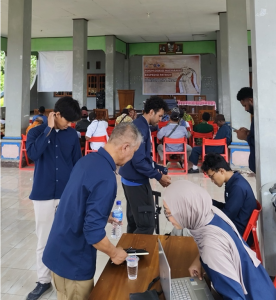
Since August 2025, the team has carried out data and information collection activities through a series of discussions with various stakeholders, including relevant agencies at district and provincial levels, community leaders and local residents. The collected data is then analyzed internally and the results are presented back to the community through a Forum Group Discussion (FGD). Through this FGD activity, the team obtained a lot of valuable input from community leaders which will then be discussed in more depth in a follow-up FGD with policy makers. From the results of observations and discussions, it appears that this area has great potential for development—both in terms of land fertility, rich biodiversity, and superior commodities such as cocoa which require a more structured and sustainable supply chain system.
Apart from that, we also see greater potential in the education sector, especially through improving supporting infrastructure that can facilitate capacity development for both teachers and students. These efforts need to be accompanied by improvements and additions to physical facilities such as school buildings, so that the teaching and learning process can take place more optimally and sustainably, as well as encouraging improvements in the quality of human resources in this transmigration area.
Currently, the team is compiling all the findings and study results that have been obtained into the form of a comprehensive report, which is expected to become a policy recommendation for the government, both at the central and regional levels. It is hoped that this report can provide strategic direction for the development of transmigration areas in Papua in a sustainable manner and based on local potential.
Some camera shots:
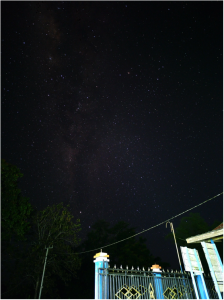
1. The quality of the sky in this area is classified as very good, as can be seen from the condition of the night sky which still shows the stars clearly, and can even be captured using a cellphone camera without the help of special equipment.
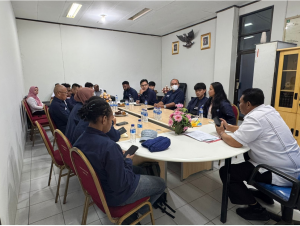
2. Discussion with the Papua Province Cooperative & SME Labor Service
3. Discussion at the Jayapura Regency Manpower, Cooperatives, Small and Medium Enterprises Service
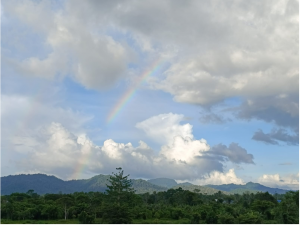
4. The natural beauty of Papua
5. FGD
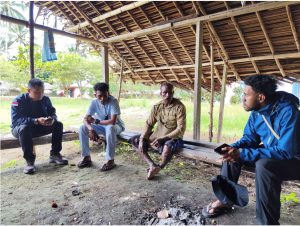
6. Interviews with the community