
ITB International Undergraduate Program is an educational program that requires students to be active in various global academic activities. Students taking part in this program will experience the atmosphere of international education. In addition, Undergraduate International Program is part of ITB’s efforts to serve prospective Indonesian students from non-national curriculum high schools. It is hoped that this broader service will provide good opportunities for Indonesian citizens abroad to study at ITB.
ITB International Undergraduate Program is open for both Indonesian and foreign citizenships students. Institut Teknologi Bandung (ITB) will accept new students for this program through ITB International Class.
Learning System Overview
ITB International Undergraduate Program aims to provide each student with an academic experience of international quality. Since the curriculum is specifically designed to enable students to compete globally in various fields, all students must do a minimum of 1 semester of outbound exchange at their own expense to various ITB partner universities abroad. As a result, they will get the best learning experience at world-class universities and build a global network that could provide significant benefits upon graduation. For all academic activities in the International Class, the language of instruction is entirely in English.
International Education Cost Benchmark
| COUNTRY | AVERAGE TUITION FEE FOR INTERNATIONAL STUDENTS | TYPICAL LIVING COST | STUDENT VISA FEE (RANGE IN USD, APPROX.) |
| Australia | 20,000 – 45,000 | 15,000 – 25,000 | 700 – 1,100 |
| Singapore | 20,000 – 50,000 | 12,000 – 20,000 | 30 – 100 |
| Malaysia | 4,000 – 12,000 | 4,000 – 8,000 | 50 – 150 |
| South Korea | 6,000 – 20,000 | 8,000 – 12,000 | 50 – 150 |
| Japan | 6,000 – 15,000 | 10,000 – 18,000 | 0 – 30 |
| Taiwan | 3,000 – 10,000 | 6,000 – 10,000 | 50 – 100 |
| China | 2,500 – 10,000 | 4,000 – 8,000 | 60 – 150 |
| Netherlands | 10,000 – 25,000 | 12,000 – 20,000 | 200 – 400 |
 .
.
Quanta Physics: From Fundamental Principles to Real-World Impact
Quality Undergraduate Education in Theoretical and Applied (QUANTA) Physics is the International Undergraduate Program in Physics at the Faculty of Mathematics and Natural Sciences, Institut Teknologi Bandung (FMIPA ITB). Designed for globally minded students, QUANTA Physics offers an exceptional academic environment for those who seek to explore the fundamental laws governing the universe while contributing to technological and scientific advancements.
Through a thoughtfully crafted curriculum, the program provides a rigorous foundation in core physical principles complemented by essential analytical, computational, and experimental competencies. Students develop the intellectual agility needed to navigate and innovate within today’s rapidly evolving scientific landscape. With its blend of theoretical depth and real-world applicability, QUANTA Physics prepares future physicists to make meaningful contributions—from unveiling the mysteries of nature to shaping the technologies that will define our future.
Areas of Specialization
Students may develop their interests and competencies through six expertise groups:
- Earth Physics and Complex Systems
- Instrumentation and Computational Physics
- Magnetic and Photonic Physics
- Advanced Materials and Applied Physics
- Nuclear Physics and Biophysics
- Theoretical Physics and High-Energy Physics
Each area provides opportunities for engaging and relevant research, from exploring natural phenomena to developing future technological innovations.
National and International Recognition
The Bachelor’s Program in Physics at FMIPA ITB has received an “Unggul” (Excellent) accreditation from BAN‑PT (valid from 1 October 2021 to 1 October 2026) and international accreditation from ASIIN (Germany) (valid from 16 March 2021 to 30 September 2027). These recognitions affirm that ITB physics graduates are highly competitive globally, whether they choose to pursue further studies or build careers in research, engineering, geophysics, medicine, and advanced technology sectors.
International Partnerships
The program is strengthened by active collaborations with international universities. Notable partnerships include long-standing cooperation with the Korea Advanced Institute of Science and Technology (KAIST), which has supported outbound mobility programs since 2010 with more than 100 participating students, as well as sustained collaboration with many institutions which facilitates joint research activities and academic exchanges.
Career Information
Research & Academia : Work as a research assistant, laboratory scientist, or pursue postgraduate studies leading to roles like academic researcher or lecturer.
Industry & Engineering : Opportunities in energy, aerospace, electronics, materials science, and nanotechnology.
Healthcare & Medical Physics : Roles in hospitals as clinical scientists, radiation protection practitioners, or medical imaging specialists.
Data & Technology : Careers in software development, data analysis, telecommunications, and IT.
Finance & Consulting : Physics graduates are valued for analytical skills in actuarial work, quantitative analysis, and risk management.
Education & Communication : Teaching in schools or working as technical authors and science communicators.
Curriculum
Physics
| Semester 1 | Semester 2 | ||||
| Code | Subject | SKS | Code | Subject | SKS |
| MA1101 | Mathematics I | 4 | FI1201 | General Physics IIA | 3 |
| FI1101 | General Physics I | 3 | FI1204 | Basic Physics Laboratory II | 1 |
| KI1101 | General Chemistry I | 3 | MA1201 | Mathematics IIA (for Natural Sciences and Engineering) | 4 |
| WI1101 | Pancasila | 2 | KI1201 | General Chemistry IIA | 3 |
| WI1102 | Computational Thinking | 2 | WI2005 | Indonesian Language | 2 |
| WI1103 | Introduction to Principles of Sustainability | 2 | WI2004 | English | 2 |
| WI1111 | Basic Physics Laboratory | 1 | WI2001 | Introduction to Engineering and Design | 3 |
| WI1112 | Basic Chemistry Laboratory | 1 | |||
| Semester 5 | Semester 6 | ||||
| Code | Subject | SKS | Code | Subject | SKS |
| FI3101 | Mechanics of Deformable-Objects and Fluids | 3 | FI3201 | Quantum Physics | 4 |
| FI3102 | Waves | 4 | FI3202 | Statistical Physics | 3 |
| FI3104 | Experiment in Modern Physics and Optics | 2 | FI3204 | Experiment in Physics Research | 2 |
| FI3103 | Computational Methods | 3 | FI3203 | Simulation and Modelling of Physical Systems | 2 |
| WI2006 | Civic Education | 2 | FI3205 | Scientific Communication | 2 |
| WI201X | Religion | 2 | FI3206 | Physics of Biological System | 2 |
| Semester 7 | Semester 8 | ||||
| Code | Subject | SKS | Code | Subject | SKS |
| FI4001 | Solid State Physics | 3 | FI4092 | Final Project | 3 |
| FI4002 | Nuclear Physics and Particles | 3 | |||
| FI4003 | Problem Solving in Physics | 2 | |||
| FI4091 | Proposal of Final Project | 3 | |||
.
Getting to Know: Pure and Applied Mathematics
Program Advantages
The Bachelor’s Program in Mathematics at ITB has received the “Excellent” accreditation rating from the National Accreditation Board for Higher Education (BAN-PT), valid from October 1, 2021, to October 1, 2026.
The program has also obtained international accreditation from ASIIN (Accreditation Agency for Degree Programs in Engineering, Informatics, Natural Sciences, and Mathematics), based in Germany. This accreditation is valid from March 16, 2021, to September 30, 2027.
The Mathematics Undergraduate Program at ITB offers a strong and comprehensive curriculum that encompasses mathematical foundations and major branches, including algebra, analysis, geometry, statistics, and applied mathematics.
Learning System Overview
To support the international class, the curriculum will be aligned with international standards through:
- The use of English as the medium of instruction for all courses in the international class
- Adjustments to syllabi to match curricula of partner universities abroad, particularly in learning outcomes and assessment methods
- The provision of elective courses relevant to global issues and current research developments
- This curriculum retains ITB’s distinctive strength in rigorous theoretical approaches while also expanding space for applied and interdisciplinary collaborations
- 61 faculty members with international experience and strong English proficiency
- Excellent computer laboratory facilities, libraries, and lecture halls
- Innovative learning approaches, such as mathematical modeling and the use of technology in mathematics education
Partner Universities
Many faculty members have research collaborations with universities abroad. Some of these universities include:
- Swansea University
- Delft University of Technology
- Universitat de Lleida
- Khalifa University
- Chuo University
- Ibaraki University
- The University of Newcastle
Career Information
Teaching: Become a math teacher at schools or tutoring centers.
Data Analysis: Work with numbers and data to help companies make decisions.
Finance: Jobs like banking, insurance, or investment where math helps manage money.
IT and Software: Use math skills to develop software or work in technology.
Researcher: Help in scientific or academic research using math.
Curriculum
Mathematics
| Semester 3 | Semester 4 | ||||
| Code | Subject | SKS | Code | Subject | SKS |
| MA2111 | Fundamentals of Mathematics | 2 | MA2231 | Multivariable Calculus | 4 |
| MA2121 | Elementary Linear Algebra | 4 | MA2271 | Introduction to Differential Equation | 4 |
| MA2151 | Simulation and Computational Mathematics | 4 | MA2251 | Discrete Mathematics | 4 |
| MA2181 | Data Analysis | 4 | WI2004 | English | 2 |
| WI201X | Religion | 2 | BI1011 | Biology A | 2 |
| WI2006 | Civic Education | 2 | |||
| Semester 5 | Semester 6 | ||||
| Code | Subject | SKS | Code | Subject | SKS |
| MA3131 | Introduction to Real Analysis | 4 | MA3231 | Introduction to Complex Analysis | 4 |
| MA3171 | Numerical Mathematics | 4 | MA3271 | Mathematical Modeling | 4 |
| MA3181 | Probability Theory | 4 | WI2021 | Industrial Engineering Management | 2 |
| MA3071 | Introduction to Optimization | 4 | MA3011 | Career in Mathematics | 2 |
| Semester 7 | Semester 8 | ||||
| Code | Subject | SKS | Code | Subject | SKS |
| MA4091 | Mathematics Seminar I | 1 | MA4092 | Mathematics Seminar II | 1 |
| MA4093 | Final Project I | 3 | MA4094 | Final Project II | 3 |
Getting to Know: International Undergraduate Programin Actuarial Science
Since its establishment in 2018, the ITB Undergraduate Actuarial Science Program has been one of the leading programs focusing on the development of applied and globally standardized actuarial and financial science. In the era of globalization and economic integration, the demand for professionals with international expertise continues to increase, particularly in the insurance, finance, risk management, and financial technology (fintech) sectors where skilled professionals play a critical role in supporting industry growth and innovation.
The Undergraduate Actuarial Science Program at ITB holds an “Excellent” national accreditation from LAMSAMA. Its curriculum aligns with international actuarial standards, including those of the SOA and IFoA, ensuring graduates gain globally recognized competencies for today’s financial industry.
Strong International Collaborationand Partnerships
The program collaborates with international partner universities through student exchanges, study-abroad opportunities, joint thesis supervision, and international guest lectures. These initiatives broaden students’ global networks and academic exposure.
Innovative and Interactive Learning
All courses are delivered in English using interactive, research-based methods that build critical thinking, adaptability, and problem-solving skills in global contexts.
Exposure to InternationalIndustry Experience
Students gain real-world insights through international internships at financial institutions, insurance companies, and fintech industries, strengthening their understanding of actuarial practice.
Support from Internationally Experienced Faculty and Practitioners
The program is supported by 66 faculty members (28 core faculty), many of whom graduated from leading overseas universities. International guest lecturers such as Ken Seng Tan from the University of Waterloo further enrich the curriculum by providing insights into current global actuarial perspectives and emerging industry trends.
Continuous Quality Assurance System
Program quality is maintained through regular evaluations, satisfaction surveys, tracer studies, and national and international accreditation processes.
Graduate Competitiveness and Professionalism
Graduates are equipped to compete globally and pursue international actuarial certifications, supported by strong analytical skills, cross-cultural communication, and professional integrity.
Partner Universities
Although the ITB Undergraduate Actuarial Science Program has not yet established formal international university partnerships, it has collaborated in educational activities such as International Virtual Courses and joint workshops) and research with:
-
UiTM, Malaysia
-
Durham University
-
University of Waterloo
-
Khalifa University
-
UiTM, Actuarial Science
-
University Malaysia Terengganu
-
University of the Philippines Diliman
-
Kuwait University
-
Kasetsart University
-
Swansea University
-
Keio University
-
University of Malaysia
-
Nanyang Technological University
Potential Partner Institutions for Implementing the International Program
-
University of Waterloo (Canada)
Collaboration in actuarial science and applied mathematics. -
Heriot-Watt University (UK)
Double degree programs and student exchange. -
University of New South Wales (UNSW)
Professional certification and international internships. -
University of Melbourne
Joint research and collaborative teaching. -
Society of Actuaries (SOA)
Professional certification and curriculum alignment. -
Institute and Faculty of Actuaries (IFoA)
Program affiliation and global certification pathways.
Career Prospects
Graduates of the Bachelor’s Degree Program in Actuarial and Financial Sciences (AFiS) shall be able to:
- Apply actuarial, mathematical, statistical, and financial principles to analyze, model, and manage financial risks in insurance, pension, and related sectors.
- Demonstrate competence in risk assessment and quantitative analysis to support decision-making in insurance, social security, investment, banking, and governmental institutions.
- Utilize appropriate computational tools and data analytics techniques in solving actuarial and financial problems.
- Integrate interdisciplinary knowledge in addressing complex risk and financial management issues.
- Communicate actuarial findings effectively to both technical and non-technical stakeholders.
- Uphold professional ethics and regulatory standards in actuarial practice and public policy formulation.
Graduates can pursue careers as actuaries in insurance, pensions, and reinsurance, where they model risk, price financial products, and design retirement systems, often earning high salaries after professional certification. Many also move into data science, analytics, and artificial intelligence roles, as their training in probability and statistical modeling aligns well with modern machine learning and big data applications. In finance and banking, actuarial graduates work as quantitative analysts, risk analysts, treasury specialists, or investment analysts, contributing to financial modeling and risk management.
Alumni Testimony
Wilbert Alvin Arsa’ad
Now at AXA Financial Indonesia
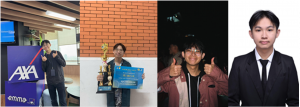
My journey as an Actuarial Science student at ITB has been both rigorous and rewarding. The curriculum strikes a perfect balance between core professional subjects and intellectual challenges. I found Life Insurance Mathematics deeply engaging as the heart of actuarial work, while Introduction to Real Analysis pushed my analytical limits, sharpening the logic needed for high-level problem solving.
The strength of this program was truly tested when I competed in the LOGIKA UI national competition. Securing 2nd Place was a proud moment that proved the theories we study at ITB are directly applicable to complex, real-world cases. This practical edge, combined with a highly supportive environment of faculty and peers, has been instrumental in my career. Thanks to the department’s strong industry ties, I have already started my professional journey at AXA Financial Indonesia.
For those looking to compete on a global stage, I highly recommend the newly opened International Undergraduate Program (IUP) in Actuarial Science. It offers the same academic excellence and industry-driven success I’ve experienced, but with a global perspective that is essential in today’s financial landscape. If you want a program that bridges the gap between the classroom and the industry, ITB is the place to be.
Yohana Yudiswara
Bachelor of Actuarial Science Program – Batch 2021
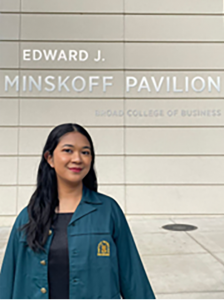 Studying Actuarial Science at ITB has been a transformative journey that far exceeded my expectations of traditional risk mathematics. The program doesn’t just teach you how to calculate premiums; the program emphasizes a ‘structural thinking’ mindset to take a vague, complex problem and break it down into logical, actionable steps. This analytical rigor was the bedrock of my success when I competed in the LOGIKA UI 2024 National Actuarial Case Competition, where my team secured 3rd Place. It proved that the training we receive at ITB is highly competitive on a national scale.
A pivotal part of my experience was an exchange program at Michigan State University (MSU). Living and studying in the United States provided a space to practice cross-cultural collaboration and adapt to new academic standards. This experience was instrumental in refining my communication, adaptability, and cross-cultural leadership skills which are vital in today’s interconnected professional world.
The combination of ITB’s technical depth and this international exposure helped me bridge the gap between actuarial theory and strategic problem-solving. This foundation allowed me to transition into the professional world as a Management Consultant at a multinational firm. For those considering the International Program, I believe this curriculum serves as a versatile foundation, demonstrating that an actuarial background is a powerful launchpad for a diverse, high-impact career.
Muhammad Agam Islami Al Mutaqin
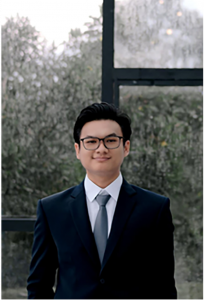 Studying Actuarial Science at ITB has been an invaluable experience. The program not only strengthened my analytical and mathematical skills but also taught me how to apply them to real-world financial and insurance challenges. ITB emphasizes a strong foundation in theory, ensuring graduates are well-prepared for professional growth
Career Information
Insurance Companies : Work as an actuarial analyst, pricing insurance products, calculating premiums, and assessing risks.
Consulting Firms : Provide risk management, pension planning, and financial modeling services for clients.
Banks & Investment Firms : Analyze financial risks, credit risks, and investment strategies.
Government & Regulatory Bodies : Contribute to policy development, social security, and public financial planning.
Data Analytics & Tech Companies : Apply statistical and modeling skills to big data, AI, and predictive analytics.
Curriculum
Actuarial Science
| Semester 1 | Semester 2 | ||||
| Code | Subject | SKS | Code | Subject | SKS |
| MA1101 | Mathematics I | 4 | MA1201 | Mathematics IIA (for Natural Sciences and Engineering) | 4 |
| FI1101 | General Physics I | 3 | FI1201 | General Physics IIA | 3 |
| KI1101 | General Chemistry I | 3 | KI1204 | General Chemistry IID | 2 |
| WI1101 | Pancasila | 2 | WI2002 | Artificial Intelligence and Data Literacy | 2 |
| WI1102 | Computational Thinking | 2 | WI2001 | Introduction to Engineering and Design | 3 |
| WI1103 | Introduction to Principles of Sustainability | 2 | WI2004 | English | 2 |
| WI1111 | Basic Physics Laboratory | 1 | AK1260 | Accounting I | 2 |
| WI1112 | Basic Chemistry Laboratory | 1 | |||
| Semester 3 | Semester 4 | ||||
| Code | Subject | SKS | Code | Subject | SKS |
| MA2122 | Basic Linear Algebra | 3 | MA2032 | Advanced Calculus | 3 |
| MA2181 | Data Analysis | 4 | AK2261 | Introduction of Mathematical Finance | 3 |
| AK2161 | Theory of Interest | 3 | AK2263 | Macroeconomics | 3 |
| AK2163 | Microeconomics | 3 | AK2281 | Probability Theory for Actuarial Science | 4 |
| AK2171 | Numerical Methods for Actuarial Science | 3 | AK2282 | Linear Model | 3 |
| WI2006 | Civic Education | 2 | AK2283 | Time Series Analysis | 3 |
| WI201X | Religion | 2 | WI2003 | Sports | 1 |
| Semester 5 | Semester 6 | ||||
| Code | Subject | SKS | Code | Subject | SKS |
| MA3172 | Mathematical Methods | 3 | AK3261 | Optimization of Mathematical Finance | 3 |
| AK3161 | Introduction of Financial Optimization | 3 | AK3283 | Risk Model II and Simulation | 3 |
| AK3183 | Risk Model I | 3 | AK3285 | Life Insurance II | 3 |
| AK3185 | Life Insurance I | 3 | AK3291 | Workshop: Application of Actuarial Science in Industry | 2 |
| MA3081 | Mathematical Statistics | 4 | BI1011 | Biology A | 2 |
| WI2005 | Indonesian Language | 2 | WI2023 | Business and Entrepreneurship Management | 2 |
| AK300X | Special Course A* | 3 | |||
| Semester 7 | Semester 8 | ||||
| Code | Subject | SKS | Code | Subject | SKS |
| AK4093 | Thesis I | 3 | AK4094 | Thesis II | 3 |
| AK4091 | Seminar I | 1 | AK4092 | Seminar II | 1 |
| AK400X | AK400X Internship A/B | 2 | |||
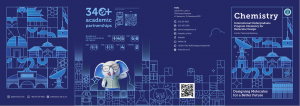
Getting to Know: Chemistry for Molecular Design
The International Undergraduate Program Chemistry for Molecular Design prepares students to design and engineer molecules with specific and impactful functions. The curriculum covers applications such as functional materials, pharmaceutical compounds, environmentally friendly catalysts, and energy-related innovations, giving students a strong foundation to tackle scientific and technological challenges.
Carrying the tagline “Designing Molecules for a Better Future,” the program emphasizes a scientific spirit rooted in sustainability and human benefit. The slogan reflects the commitment that every molecule designed is a meaningful contribution to society and the future.
Program Advantages
The Bachelor’s Program in Chemistry is accredited by the Royal Society of Chemistry (2022–2027) and LAMSAMA (2023–2027). Its curriculum is aligned with RSC and ACS standards, supported by continuous improvements in educational and research infrastructure to maintain strong academic quality.
The program offers an international OBE-based curriculum delivered in English, taught by faculty with doctoral degrees and active global research collaborations. Students benefit from opportunities for exchanges, joint research, and dual-degree pathways, supported by modern laboratories and a learning approach that integrates theory, experimentation, and computational chemistry for molecular design.
International Partnerships
The Chemistry Program at FMIPA ITB currently has two active partners under formal MoUs:
-
University of Malaya (UM), Malaysia
-
Nakhon Pathom Rajabhat University (NPRU), Thailand
In addition, ongoing discussions are being conducted with:
-
University of Groningen (the Netherlands)
-
Universiti Teknologi MARA (UiTM), Malaysia
These partnerships aim to develop joint research, co-supervision, and dual-degree programs in the fields of Molecular Design and Sustainable Chemistry.
In the medium term, the Chemistry Program at FMIPA ITB aims to strengthen its network in Europe and Southeast Asia as part of a science and technology university consortium focused on sustainability.
Career Information
Laboratory & Research : Work as an analytical chemist, medicinal chemist, or research scientist in universities, government labs, or private companies.
Pharmaceuticals & Healthcare : Roles in drug development, clinical research, toxicology, and medical diagnostics.
Industry & Manufacturing : Careers in food technology, materials science, nanotechnology, cosmetics, and chemical engineering.
Environmental & Energy : Work as environmental consultants, radiation protection practitioners, or in renewable energy and sustainability projects.
Education & Communication : Teaching in schools or universities, or working as science writers and communicators.
Business & Patent Law : Opportunities as patent attorneys, product development scientists, or in scientific equipment sales
Curriculum
Chemistry
| Semester 3 | Semester 4 | ||||
| Code | Subject | SKS | Code | Subject | SKS |
| KI2121 | Fundamentals of Analytical Chemistry | 3 | KI2221 | Separation Methods and Electrometry | 4 |
| KI2122 | Practical Analytical Chemistry | 2 | KI2231 | Structure and Reactivity of Inorganic Compounds | 3 |
| KI2141 | Chemical Structure and Bonding | 4 | KI2241 | Chemical Energetics | 4 |
| KI2151 | Organic Chemistry I | 4 | KI2251 | Organic Chemistry II | 3 |
| MA2071 | Basic Mathematics for Scientists | 3 | KI2252 | Experiments in Organic Chemistry | 2 |
| WI201X | Religion | 2 | KI2261 | Basics of Biological Chemistry | 2 |
| WI2006 | Civic Education | 2 | WI2004 | English | 2 |
| Semester 7 | Semester 8 | ||||
| Code | Subject | SKS | Code | Subject | SKS |
| KI4091 | Final Project I | 4 | KI4092 | Final Project II | 4 |
| KI4093 | Colloquium of Final Project and Bachelor Council | 1 | |||